What is batik?
The art of transforming fabric into a unique piece.
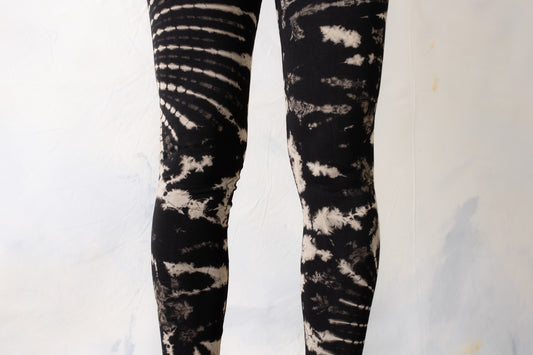
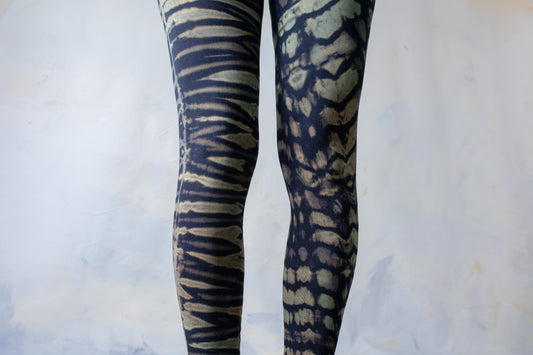
Batik is a traditional textile dyeing technique in which fabrics are selectively covered or tied to protect certain areas from dye during the dyeing process. This creates characteristic patterns – often with organic, seemingly random color gradients.
Its origins lie primarily in Indonesia, especially on the island of Java, where batik has been part of the cultural heritage for centuries. Today, batik is a global fashion statement and is interpreted in a modern way – as seen in our designs.
The most important batik techniques:
❶ Wax batik (classic batik)
- Parts of the fabric are painted with hot wax.
- The fabric is dyed – the wax blocks the dye.
- After dyeing, the wax is removed.
- Result: fine, often very detailed patterns.
This technique is very artistic and is still traditionally practiced in Indonesia today.


❷ Shibori (Knotting Batik / String Batik)
Shibori, or knotted batik, originally comes from Japan.
- Fabric is folded, knotted, twisted or tied with yarn.
- During dyeing, the dye does not penetrate the bound areas.
- Patterns emerge by chance – from circles to lines to cloud-like effects.
This technique is particularly popular for clothing because it offers a lot of freedom in design.


❸ Tie-Dye
Tie-dye is essentially the modern version of batik, a technique popularized in festival, surf and hippie fashion. However, in the 21st century, tie-dye is no longer a chaotic 70s style. Current designs emphasize monochromatic color gradients, harmonious color gradations and high-quality materials. This results in a more elegant look that's perfectly suited for everyday wear.
- The fabric is twisted more tightly or laid in spirals and fixed with rubber bands.
- Often, several colors are applied one after the other or simultaneously.
- The color gradients are more intense and striking – typical for the tie-dye look.
Tie-dye stands for expressiveness, creativity and individuality and has long since found its place in high-quality fashion labels.

Materials and colors
Traditionally, batik is done with natural fibers such as cotton or viscose, as these absorb dyes particularly well. For modern batik looks, synthetic fabrics are also used today – special textile dyes are employed for these.
Depending on the technology:
- natural dyes (e.g. indigo)
- industrial paints
- or even ecological alternatives are used.
What makes batik so special
Unique patterns ➥ Each piece is unique, as no dyeing process can be exactly reproduced.
Craftsmanship ➥ Traditional dyeing techniques meet modern interpretations, often with high standards of craftsmanship.
Natural ➥ Often works with natural fibers & dyes
Creative ➥ Enables individual color gradients, patterns and designs from subtle to striking.
Expressive ➥ Perfect for special statement pieces